
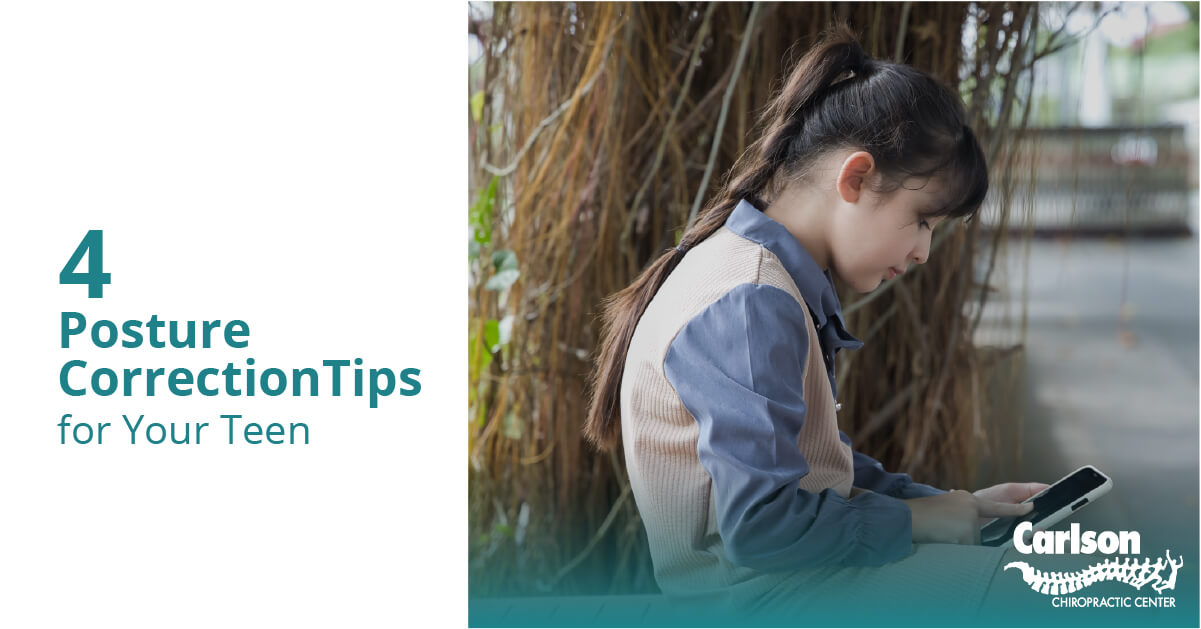
There are few things worse than watching your teen struggle with their posture. Healthy habits are hard to instill. The pervasive use of electronic devices has most parents frustrated, and the advent of concerns of “text neck” is just the beginning! We all look at our kids’ lifestyles and wonder how they are going to overcome these modern challenges.
As your kids grow and mature, it is important to help them create healthy habits that can prevent common musculoskeletal issues like poor posture, neck and back pain and even bulging discs. Posture correction may seem like a daunting task. With a few helpful tips, you can teach your teens early on about the importance of good posture and a healthy diet. Nagging has never worked, but inviting your kids into some dialogue about healthier habits is something we all can do! To help you get started, we offer here 4 suggestions for great conversations and actionable ideas.
Concerned about your teen’s posture? Contact our office today to schedule a posture check and get personalized recommendations before minor issues become long-term problems.
Now, here are four practical ways to help your teen improve posture and protect their spine long-term:
Stop the Slump
Most teens don’t even realize they’re slouching. Long hours at desks, gaming setups, and phones naturally pull the head forward and round the shoulders.
Try these simple adjustments:
- Raise screens to eye level
- Keep feet flat on the floor
- Encourage shoulders back and chin tucked
- Consider a sit-to-stand desk for homework
Even small ergonomic changes can dramatically reduce strain on the neck and spine. As a parent, you probably remember being told to “sit up straight” and modern technology has only made this issue more important. Consistent reminders combined with practical changes can make all the difference.
Limit “Text Neck” Time
The average teen spends 7+ hours per day on screens. When the head tilts forward, it can place up to 60 pounds of pressure on the neck.
Encourage:
- Device breaks every 30–60 minutes
- Holding phones at eye level
- Using voice-to-text when possible
- Setting screen time boundaries
Less forward head posture = less long-term spinal stress.
Spend Some Time Moving Around
Even if your teen isn’t a star athlete, it is important for them to get up and get some exercise each day. With low impact exercises like walking, biking and jogging, they can improve their heart health, keep off extra weight and strengthen their muscles.
Want some extra motivation to get your teen up and moving each hour? Try investing in a fitness tracker so that they can track their progress on their PC or smartphone. You don’t have to get fancy with an Apple Watch. A simple pedometer can provide a fun way to track your steps and even spark some “healthy” (see what we did there?) competition!
Share the Stretching
Incorporating a few stretches into your daily routine will help with not only posture but also better blood flow throughout your body. Encourage your teen to perform these few simple stretches to ensure healthy muscles and joints for years to come.

Add stretching into your daily routine to improve posture.

Stretching improves blood flow throughout your entire body.

Help the future of your muscles and joints by incorporating simple stretches into your routine.
Helpful posture stretches:
- Chest openers
- Neck mobility stretches
- Shoulder rolls
- Hamstring stretches
Make it something you do together — teens model what they see.
With a few helpful tips and a bit of loving direction from you, your teens can begin building healthy habits that they will carry with them for years to come.
Download A Lifetime of Healthy Living
to get your teen on the right track today!
FAQ
What causes poor posture in teens?
Excessive screen time, weak core muscles, heavy backpacks, and prolonged sitting are the most common causes.
Can poor posture cause long-term damage?
Yes. Over time, poor posture can lead to chronic neck pain, back pain, disc issues, and reduced mobility.
What is text neck?
Text neck refers to neck strain caused by looking down at phones or devices for extended periods.
How can I tell if my teen needs chiropractic care?
If pain, headaches, or visible spinal misalignment are present, a professional evaluation may help.