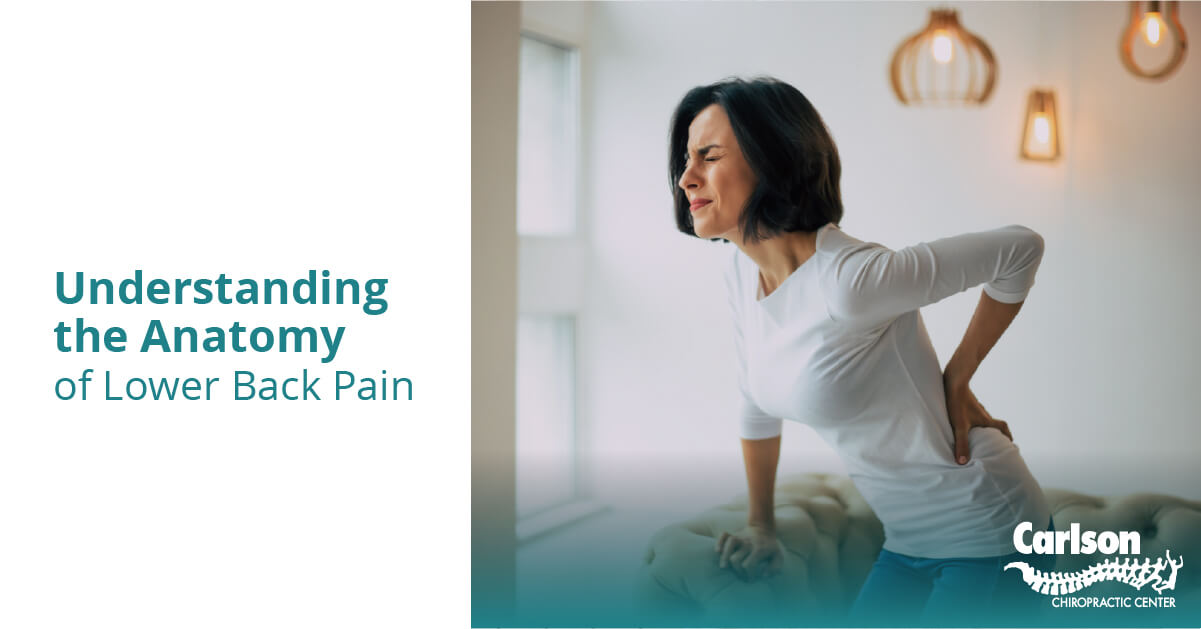
Lower back pain is one of the most common health complaints among adults. Whether it develops gradually or appears suddenly, chronic lower back pain can significantly affect your mobility, sleep, and overall quality of life.
Some causes stem from lifestyle habits — such as prolonged sitting, poor posture, or improper lifting. Others may be outside your control, including genetic predisposition, age-related degeneration, or past injuries.
At Carlson Chiropractic, we believe lasting relief starts with understanding the root cause.
Let’s break down how the lower spine works — and what commonly goes wrong.
The Basics of Your Lumbar Spine
The spine is a complex structure made up of:
- Vertebrae (bones)
- Intervertebral discs (shock absorbers)
- Ligaments and tendons
- Muscles
- Nerves and nerve roots
The lower portion of your spine — called the lumbar spine — contains five vertebrae (L1–L5). This region carries much of your body weight and allows for bending, lifting, and twisting.
The spine naturally forms three curves:
- Cervical (neck curve)
- Thoracic (mid-back curve)
- Lumbar (lower back curve)
When these curves are disrupted, stress increases on discs, joints, and nerves — often leading to pain.
Common Causes of Lower Back Pain
Lower back pain can develop from muscle strain or from deeper structural issues.
1. Muscle or Ligament Strain
Overuse, improper lifting, or sudden movement can stretch or tear soft tissues. This is one of the most common causes of acute back pain.
2. Degenerative Disc Disease
As we age, spinal discs lose hydration and elasticity. This natural degeneration reduces cushioning between vertebrae and can cause chronic pain, stiffness, or nerve irritation.
3. Spinal Stenosis
Spinal stenosis occurs when the spinal canal narrows, placing pressure on nerves. Symptoms may include:
- Lower back pain
- Numbness or tingling
- Leg weakness
- Pain that worsens when standing
4. Herniated or Bulging Discs
When a disc protrudes out of place, it can compress nearby nerves, causing radiating pain (often sciatica), weakness, or numbness.
5. Trauma or Fractures
Accidents, falls, or impact injuries can damage vertebrae, discs, or supporting structures.
6. Less Common Causes
Though rare, lower back pain can also be related to:
- Autoimmune disorders
- Tumors
- Severe infections
Persistent pain should always be evaluated professionally.
Why Ignoring Lower Back Pain Can Make It Worse
When spinal discs, joints, or connective tissues are compromised, surrounding structures compensate. Over time, this can:
- Increase inflammation
- Accelerate degeneration
- Reduce mobility
- Lead to chronic nerve compression
Early evaluation often prevents long-term complications.
Find Real Relief from Lower Back Pain
No matter the cause, the result is the same: ongoing discomfort that disrupts your life.
At Carlson Chiropractic, our team focuses on identifying the root cause of your pain — not just masking symptoms.
We provide:
- Comprehensive evaluations
- Personalized treatment plans
- Preventative strategies
If you’re struggling with persistent lower back pain, don’t wait.
Schedule your consultation today and take the first step toward lasting relief.
For a wealth of additional information about healthy living at all stages of life, check out our free guide, A Lifetime of Healthy Living Tips for Every Generation!

Frequently Asked Questions About Lower Back Pain
What is the most common cause of lower back pain?
Muscle strain and degenerative disc changes are the most common causes.
When should I see a doctor for lower back pain?
If pain lasts longer than a few weeks, radiates down the leg, or causes weakness, evaluation is recommended.
Can lower back pain go away on its own?
Mild strain may improve with rest, but chronic or recurring pain often requires treatment.
Is lower back pain always related to a disc problem?
No. Pain may originate from muscles, joints, ligaments, or nerves.