

If you sit at a desk for work, how many hours do you think you sit on average? The answer may surprise you…
In 2019, the average U.S. adult spent 6.5 hours sitting a day! Yep. Read that again. The average adult sits for 6+ hours, and the number for teens is even higher at 8+ hours.
Unfortunately, those long hours sitting and working at a desk can create poor posture and cause a number of short-term and long-term back issues. Applying these 4 desk stretches to your daily work routine will help you improve your posture and prevent back pain so you can stay healthy and productive at the same time.
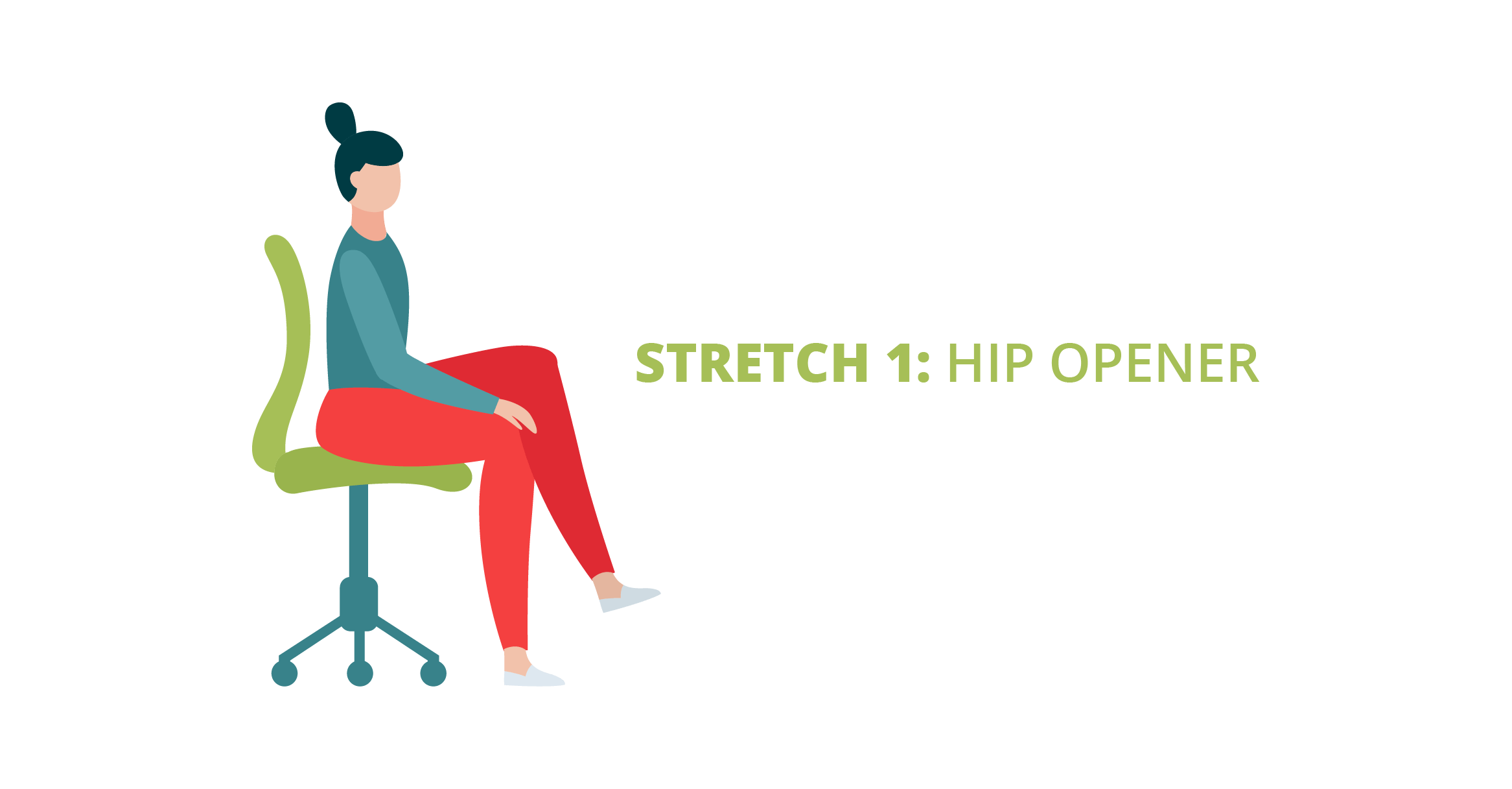
Stretch 1: Hip Opener
Hip muscles run from our thighs to our lower back and enable us to bend and pick up things. Unfortunately, hips contract when sitting, and the longer we sit, the shorter and weaker our hip muscles become. Stretching our hips helps keep them strong and prevents future back pain.
Instructions:
- Sit towards the edge of your chair with your feet planted hip-width apart.
- Lift your right ankle and place it on the opposite thigh just above the knee.
- Sitting straight and tall, slowly bend the upper body forward from your hips. Remember to keep your spine nice and straight. A stretch through the back of your right hip should be happening.
- Hold this for 30 seconds then slowly return to the starting position, keeping your spine as straight as possible.
- Repeat two to three times, then switch legs and repeat.
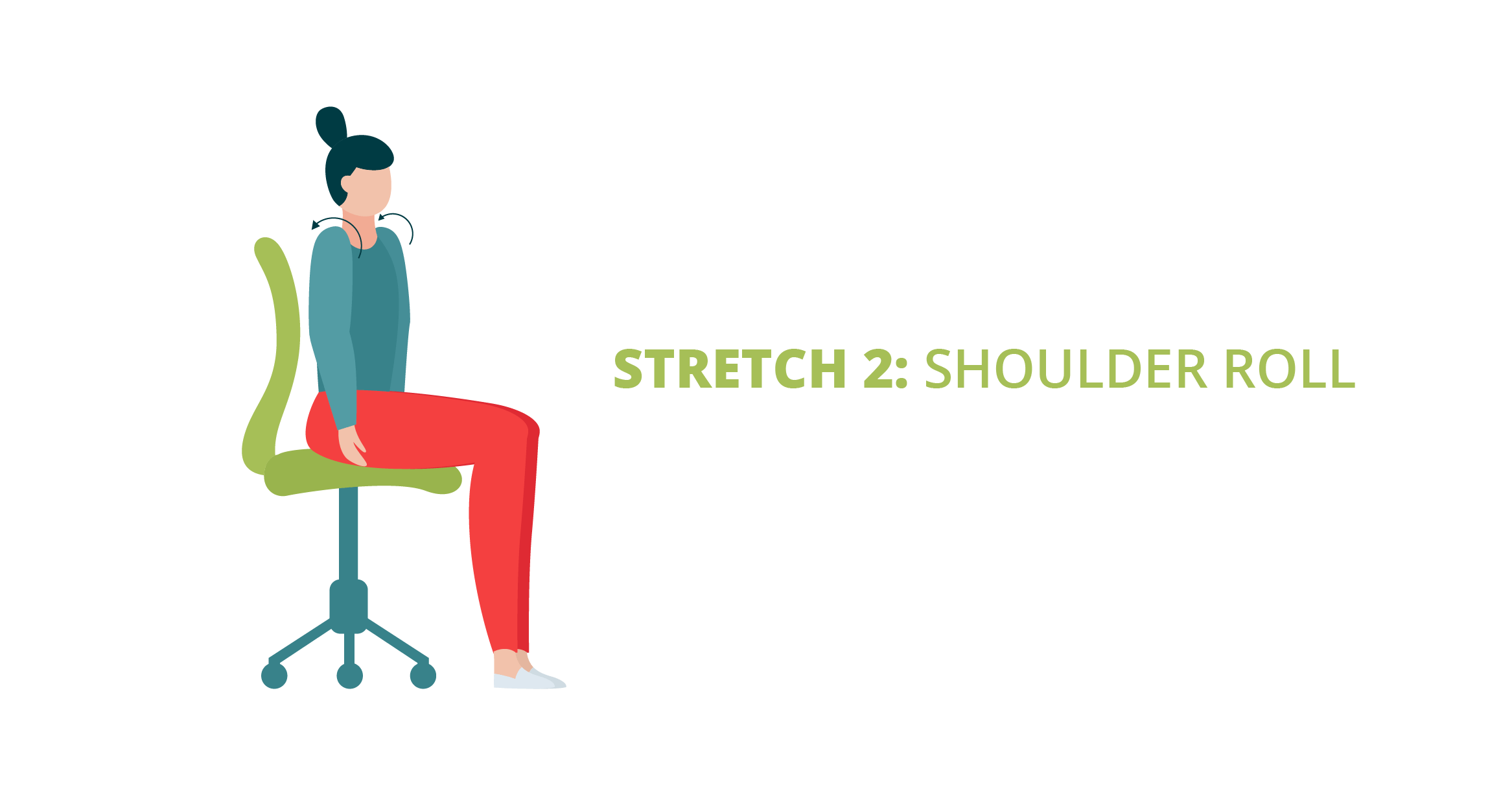
Stretch 2: Shoulder Roll
It’s normal for our back to begin to roll forward into a slouch position as we sit at our desks for extended periods of time. However, this type of poor posture can cause significant upper back pain. Shoulder roll desk stretches help reduce shoulder tension and upper back discomfort by relieving the stress that slouching causes.
Instructions:
- Sit tall in your chair with your hands by your side.
- Roll your shoulders backward in a circular motion, complete five rotations, and repeat rotating forward. Try rolling your shoulders in the biggest rotation you can.
- Repeat these sequences 2-3 times.
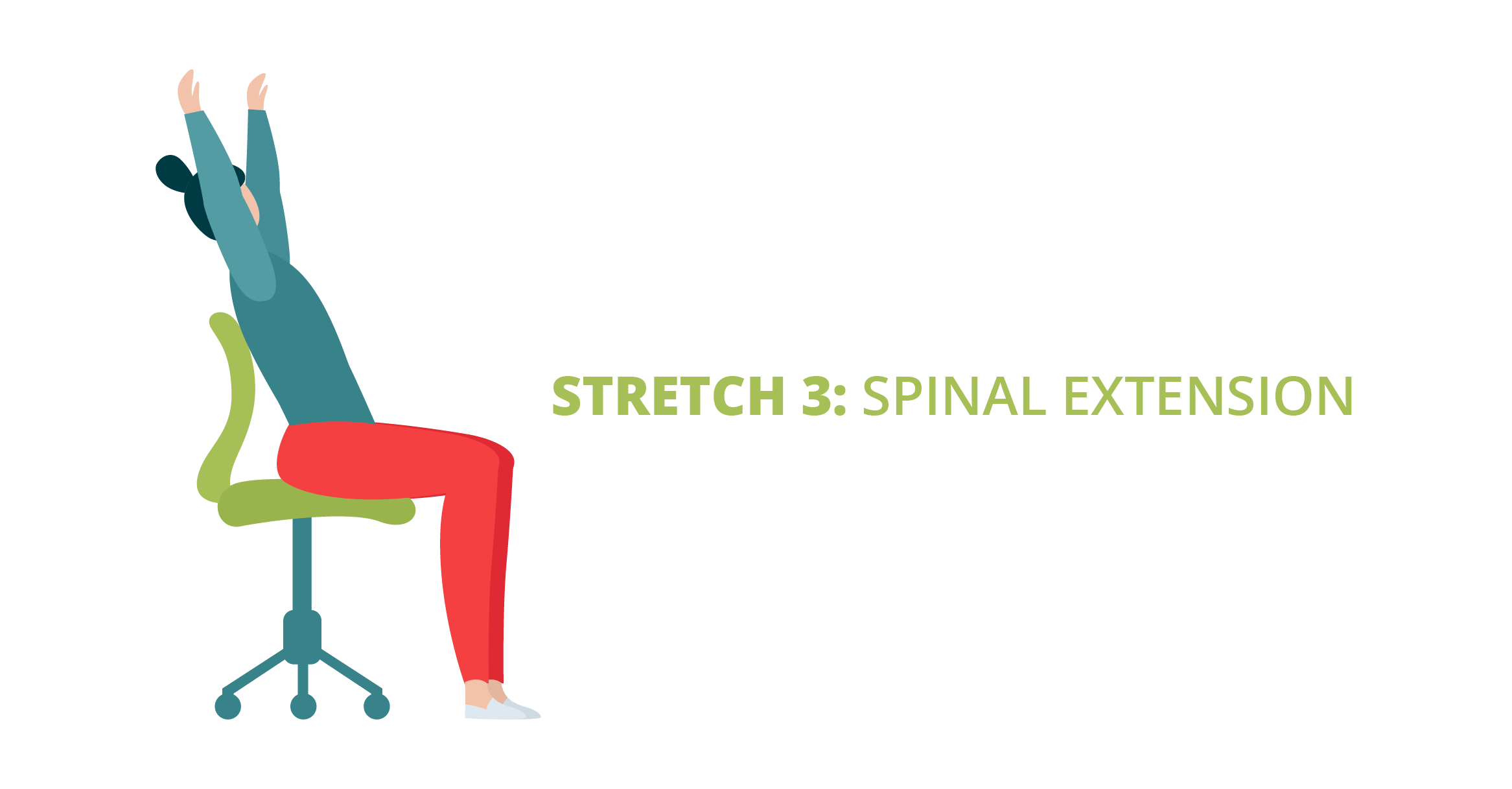
Stretch 3: Spinal Extension
Did you know bad posture causes significant inflammation of the spinal muscles and soft tissue? Spinal extensions, also known as thoracic extensions, target the upper back, relaxing the muscles and tissue in your shoulders and neck by relieving pressure on your spine. Try this desk stretch to help relieve upper back tension!
Instructions:
- Start in a seated position with feet planted under your knees and your back against the back of the chair.
- Allow your upper body to fall over the back of the chair.
- Extend your arms above your head for a deeper stretch.
- Hold for 10 seconds and release.
- Repeat 2-3 times.
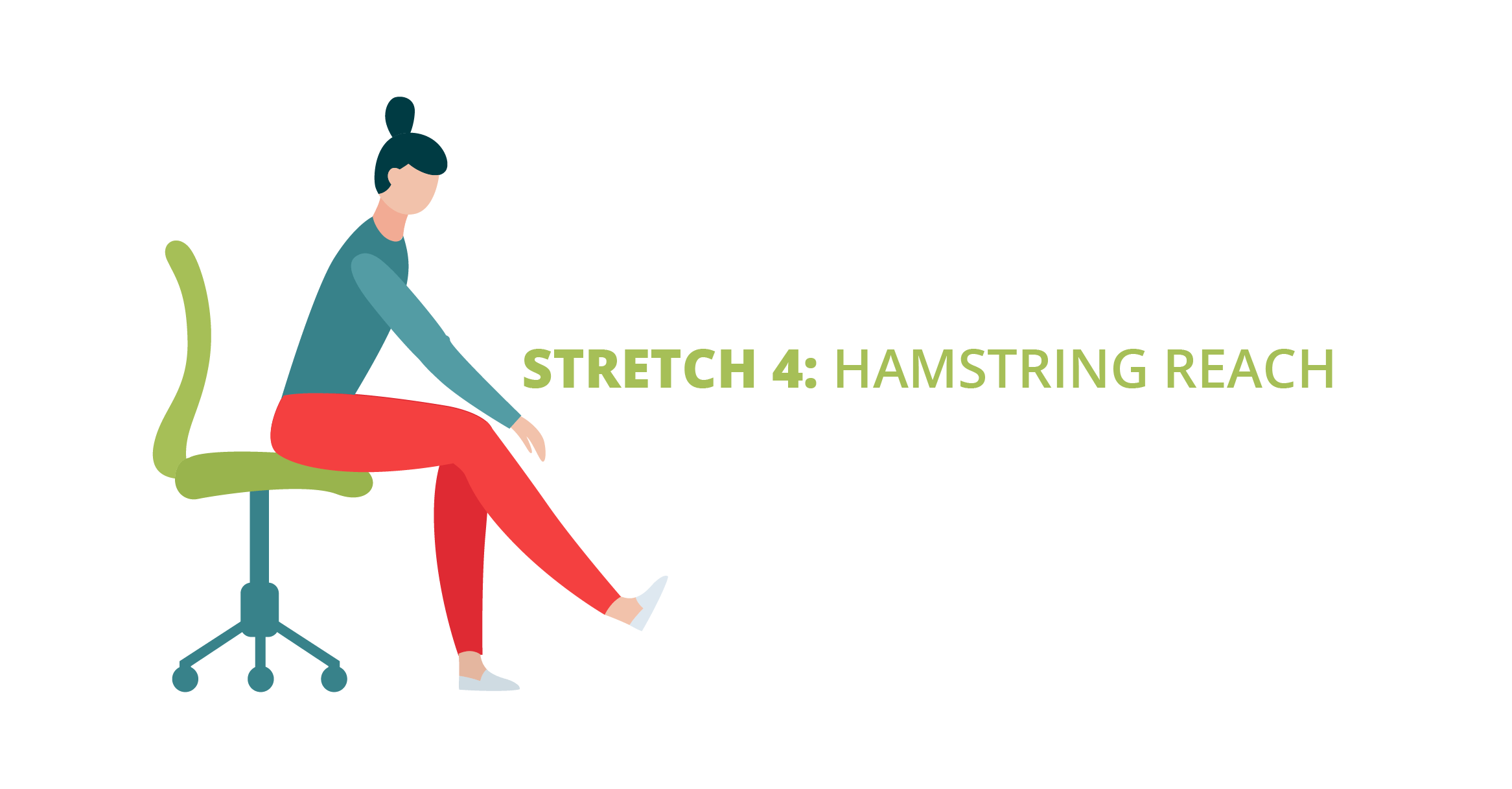
Stretch 4: Hamstring Reach
Did you know leg muscles have a tremendous impact on our lower back? In fact, tight hamstring muscles can affect the natural curve of the spine. Adding this hamstring desk stretch to your workday will keep these muscles loose and provide lower back relief.
Instructions:
- Sit close to the edge of your chair with your feet planted.
- Sliding your right leg out with your heel to the ground, keep your knee straight and flex your toes up toward your shin.
- Start to slowly reach toward your toes, keeping your back and spine straight.
- Hold for 30 seconds.
- Repeat 2-3 times, then switch legs and repeat.
Bonus Tips for Desk Workers
- Stand up at least once every hour
- Take a short walking break during lunch
- Adjust your screen to eye level
- Keep feet flat and knees at 90 degrees
- Consider ergonomic seating or a sit-to-stand desk
Consistency matters more than intensity.
When Stretches Aren’t Enough
While daily desk stretches can significantly reduce tension, persistent back pain may indicate an underlying issue such as disc irritation, muscle imbalance, or joint dysfunction.
If you continue to experience:
- Chronic lower back pain
- Neck stiffness
- Radiating discomfort
- Limited mobility
It may be time for a professional evaluation.
Working with a trusted chiropractic team can help identify the root cause and create a personalized treatment plan.
Looking for a more in-depth stretching routine? Download our FREE guide, Staying Active While Staying Healthy: An Everyday Stretching Guide!
Frequently Asked Questions
How often should I do desk stretches?
Ideally every hour, even if just for 1–2 minutes.
Can sitting too long cause permanent back damage?
Prolonged poor posture can contribute to chronic pain and disc stress over time.
Are desk stretches enough to fix back pain?
Mild tension often improves, but chronic pain may require professional assessment.
What is the best stretch for lower back pain at work?
Hip openers and hamstring stretches are particularly helpful for desk workers.